
You’re mid-conversation and someone replies with just “WDYM.” No context, no follow-up, just four letters staring back at you. If you paused wondering what it meant, you’re not alone.
WDYM meaning is one of the most common texting questions people search for today. This guide breaks down exactly what it stands for, where it shows up, and how to use it without sounding confused yourself.
What Does WDYM Mean in Text?
WDYM stands for “What Do You Mean.” People type it in texts, DMs, and comments when a message feels unclear or incomplete.
Most of the time, it’s a genuine question, someone asking for more detail before they respond. Other times, it works more like a reaction, close to saying “wait, what?” when something surprises them.
Across every app and chat, the WDYM meaning stays the same: someone wants clarity before they reply further.
Where Is WDYM Commonly Used?
WDYM shows up most often on Instagram, Snapchat, WhatsApp, Discord, and X. It fits fast, casual back-and-forth chats far better than formal writing or emails.
Tone and Style Across Platforms
On Discord or in gaming chats, WDYM often carries a playful, teasing tone between friends. In one-on-one DMs, it usually reads as a neutral, quick request for more information.
On comment sections and public replies, it can also be a way to challenge or question what someone just posted.
Examples of WDYM in Real Conversations
Here’s how WDYM typically plays out in everyday chats:
- “I can’t come tonight.” → “Wdym? You said you were free.”
- “That test was easy.” → “Wdym easy, I completely failed it.”
- “He’s not replying to me.” → “Wdym, did you check your DMs?”
- “We’re not going anymore.” → “Wdym, what changed?”
Each example follows the same pattern: something feels unclear, so the reply asks for an explanation before moving on.
When Should You Use WDYM?
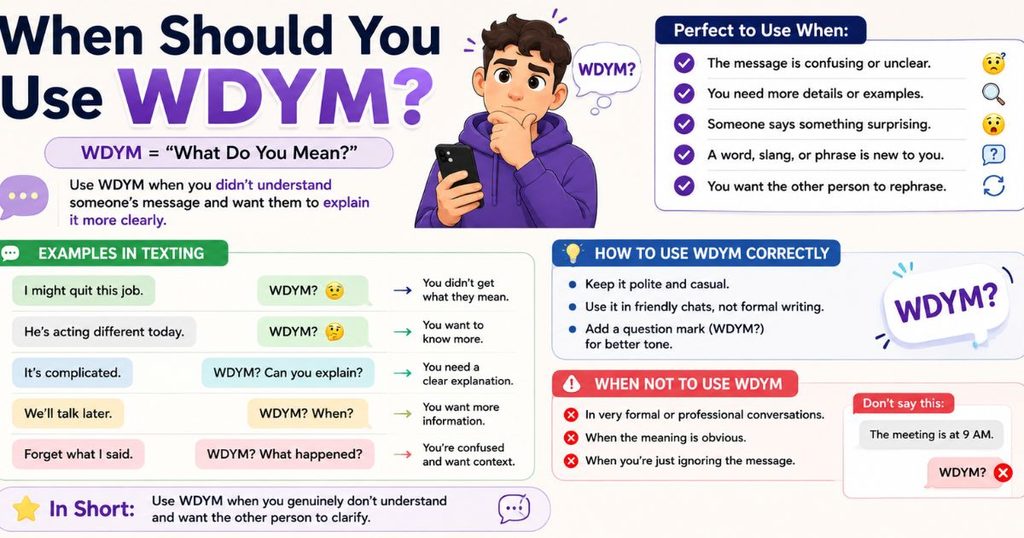
Context decides whether WDYM reads as casual and friendly or short and blunt.
When to Use WDYM
- When a message genuinely confuses you
- When you want more detail before replying
- In casual chats with friends or close contacts
- When reacting to surprising or unexpected news
When Not to Use WDYM
- In professional emails or workplace chats
- When someone is clearly upset or venting
- As a repeated, one-word response
- When a fuller question would avoid misunderstanding
What Does WDYM Mean in Different Contexts?
The letters stay identical, but the feeling behind WDYM changes depending on how and where it’s used.
Context Comparison Table
| Context | What WDYM Implies | Example |
| Genuine confusion | A real request for clarity | “Wdym, I don’t understand?” |
| Sarcasm or disbelief | Mock surprise or disagreement | “Wdym you forgot already?” |
| Playful teasing | A light, joking tone | “Wdym you’re scared right now?” |
| Professional setting | Reads as blunt or abrupt | Best avoided entirely |
Similar Slang Words and Alternatives to WDYM
Plenty of other short phrases carry a similar meaning, though none are quite as quick or recognizable.
| Slang | Meaning | Best Used For |
| Huh? | Simple confusion | Very casual chats |
| Come again? | Polite request to repeat | Slightly more formal tone |
| Say that again? | Direct clarification request | Voice notes or texts |
| IDK what you mean | Longer, more direct confusion | When WDYM feels too short |
WDYM remains the fastest, most widely recognized option among these across texting culture.
Is WDYM Considered Rude?
Not inherently. Tone depends heavily on capitalization and punctuation rather than the word itself.
Lowercase “wdym” usually reads as casual and friendly. Written in all caps with extra question marks, “WDYM??” can feel sharp or annoyed, even when that’s not the intent behind it.
Why Do People Use WDYM Instead of Full Sentences?
Texting culture rewards speed. WDYM sends the same message as “what do you mean” using a fraction of the keystrokes and time.
Shorthand like this also signals familiarity and casualness, which is exactly the tone most DMs, group chats, and comment threads aim for.
How to Reply to WDYM
- Restate your point using simpler, clearer words
- Add the context or detail you skipped earlier
- Ask “which part?” if you’re unsure what confused them
- Avoid replying with just “nvm,” since it ends the conversation without answering anything
Common Mistakes People Make With WDYM
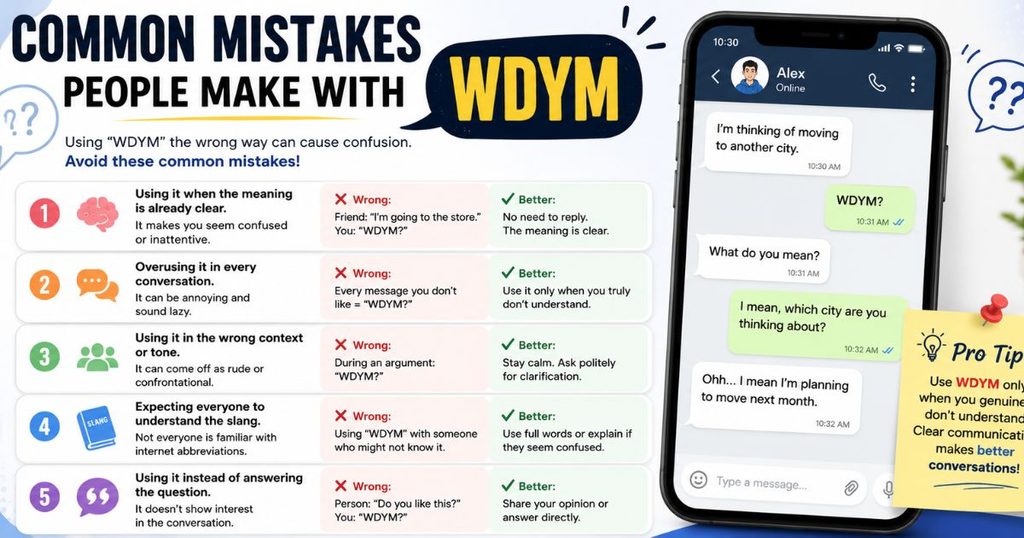
- Using it in professional or formal messages
- Typing it in all caps without meaning to sound harsh
- Sending it repeatedly, which can come across as dismissive
- Using it when the other person is upset rather than confused
Does Autocorrect Recognize WDYM?
Most modern keyboards learn WDYM after you type it a handful of times and stop trying to autocorrect it. Older or default dictionaries may still flag it as a typo or suggest a different word until it’s used often enough on that device.
WDYM in Different Languages and Cultures
Casual “what do you mean” equivalents exist in most languages. Spanish speakers might type “¿cómo que?”, Hindi speakers often say “matlab?”, and French speakers reach for “comment ça?” in similar moments of confusion.
The intent stays identical across languages: confusion first, followed by a request to explain further.
The Origin of WDYM as Texting Slang
Abbreviations like WDYM grew out of early SMS character limits and instant messaging platforms, where shorter messages sent faster and sometimes cost less to send.
As texting moved onto smartphones and social apps, the habit stuck around, even after most character limits disappeared entirely.
WDYM Trends on Social Media in 2026
Creators often leave intentionally vague captions or comments to bait “wdym” replies, since confused comments tend to boost engagement on a post.
It’s also common as a one-word reply under Reels and TikTok clips that end on a cliffhanger, an inside joke, or an unclear punchline.
How AI Chatbots Handle WDYM
People increasingly type WDYM straight into AI chat assistants when a reply feels unclear. Most conversational AI tools recognize the slang and respond by rephrasing their answer or asking exactly which part needs more clarity.
Frequently Asked Questions
What does WDYM stand for?
WDYM stands for “What Do You Mean,” a texting abbreviation used to ask someone to clarify their message.
Is WDYM rude to say?
Not usually. Lowercase, casual use reads as friendly, while all caps can feel blunt or annoyed.
What’s the difference between WDYM and IDK?
WDYM asks someone to explain further, while IDK simply means “I don’t know” about something.
Can I use WDYM in professional messages?
It’s best avoided in formal emails or workplace chats, where full sentences read as more professional.
Does WDYM mean the same thing on every platform?
Yes, the WDYM meaning stays consistent across Instagram, Snapchat, WhatsApp, and other messaging apps.
How do you reply to WDYM?
Restate your point more clearly, add the missing details, or ask exactly which part confused them.
Is WDYM only used by Gen Z?
No, but it’s most common among Gen Z and younger Millennials in casual online conversations.
Conclusion
WDYM is one of the simplest texting abbreviations to learn, but it carries real weight in just four letters. At its core, it means “what do you mean,” a quick way to ask for clarity instead of typing a full sentence.
Whether it shows up in a DM, a comment section, or a group chat, the WDYM meaning barely changes: someone wants more context before they reply. Keep tone and capitalization in mind, and you’ll never misread it again.
