
Pookie shows up everywhere these days, in comment sections, couple posts, and casual texts between friends. It is one of those nicknames that sounds simple but actually carries a lot of warmth once you understand where it comes from.
This guide breaks down what pookie actually means, how it grew from a niche term into an internet favorite, and how people use it differently depending on the platform and the relationship involved. You will also find real examples and closely related slang so you can use pookie the right way, whether you are talking to a partner, a friend, or even a pet.
What Does Pookie Mean?
Pookie is an affectionate nickname used to describe someone soft, lovable, and dear to the speaker. It works as a term of endearment similar to babe or sweetheart, but it carries a gentler, almost childlike warmth.
People call a partner pookie to signal closeness without sounding overly formal. The word does not need a big emotional moment attached to it. It fits into everyday conversation just as easily as a goodnight text or a caption under a cute photo.
Common ways people use pookie include:
- Calling a partner pookie during a normal conversation
- Referring to a pet as pookie out of affection
- Using it jokingly for a close friend who feels comforting to be around
- Captioning a photo of someone you find endearing
Origin and History of Pookie
The word pookie has roots that stretch back decades, appearing in earlier film and television as a term used between close family members or romantic partners. Its soft sound made it a natural fit for affectionate nicknames long before social media existed.
Internet culture picked the word back up and gave it new life, particularly through short clips and reaction videos where people jokingly called loved ones pookie in an exaggerated, sweet tone. That playful delivery is part of why the term spread so widely.
By the early 2020s, pookie had firmly settled into everyday online vocabulary, especially among younger users who enjoy nicknames that feel a little silly but still genuinely caring.
How Pookie Is Used on Different Platforms
Every platform gives pookie a slightly different flavor, even though the underlying affection stays the same. The table below shows how the word tends to appear across common spaces.
| Platform | Common Use of Pookie |
| TikTok | Captioning cute couple or pet clips |
| Twitter/X | Reacting affectionately to posts about a favorite person |
| Comment sections under partner or friend photos | |
| Discussing relationship nicknames and their meanings | |
| Texting | A quick, casual way to greet or check in on someone close |
Sweet Ways People Say Pookie in Daily Conversations
Beyond captions and comments, pookie has become part of how people actually talk day to day. Friends greet each other with it, partners use it as a quick check in, and some even use it as a gentle way to soften a request.
Everyday moments where pookie naturally fits:
- Opening a text with a simple “hey pookie”
- Ending a call with a lighthearted “bye pookie”
- Using it to comfort someone after a rough day
- Adding it to a birthday or anniversary message for extra warmth
This casual, low pressure usage is part of why the word feels so approachable compared to more formal terms of endearment.
What Does Pookie Mean for a Girl?
When used for a girl, pookie usually describes someone seen as soft, comforting, and easy to love. It leans gentle rather than flashy, focusing on warmth instead of physical description.
Girls are often called pookie by partners or close friends as a way of expressing that they feel safe and cherished around that person. The term rarely carries any negative undertone in this context.
Suggested image alt text: pookie meaning for a girl explained.
What Does Pookie Mean for a Boy?
For a boy, pookie carries the same underlying warmth, though it often gets used with a slightly teasing edge. It can describe a boyfriend who is soft spoken, caring, or unexpectedly gentle despite a tougher exterior.
Friends sometimes use pookie for a guy in a joking way, pointing out a soft side that contrasts with how he usually presents himself. Even then, the tone stays affectionate rather than mocking.
Pookie in Texting vs. Real Life
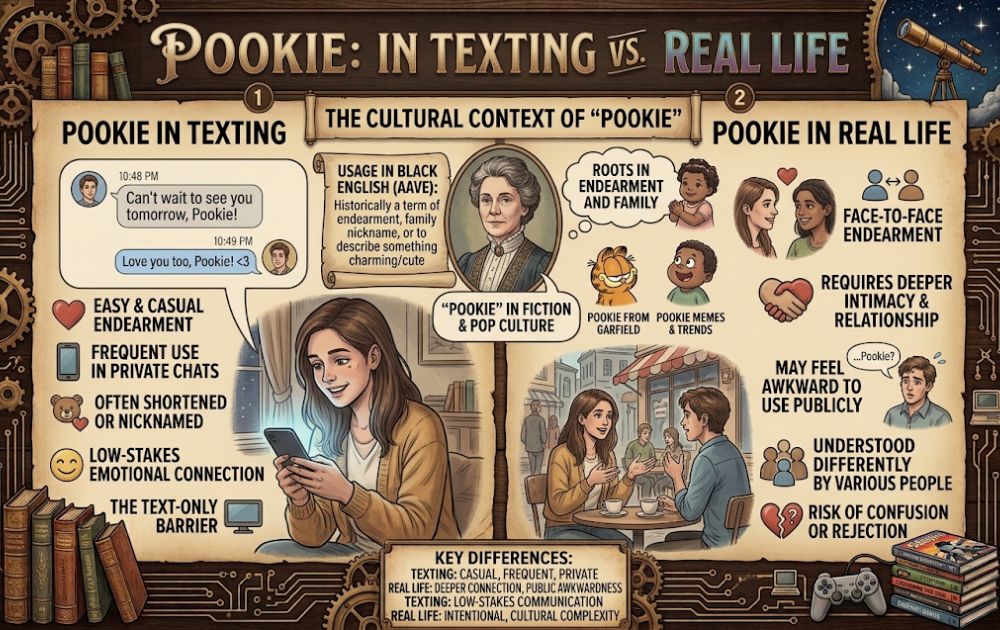
In texting, pookie often opens or closes a message as a quick way to show affection without needing extra words. It works well because it is short, familiar, and easy to type without overthinking tone.
In spoken conversation, the word can carry more personality depending on delivery, sometimes stretched out playfully or said in a softer voice to emphasize sincerity.
Key differences between texting and spoken use:
- Texting versions are usually brief and appear at the start or end of a message
- Spoken use relies on tone to shift between playful and sincere
- Texting rarely needs explanation since context is already understood
- Spoken conversations can turn the word into a running joke between two people
Examples of Pookie in Sentences
Seeing pookie in real context makes its meaning much easier to grasp.
- “Good morning pookie, hope your day goes well.”
- “My dog is such a pookie, he follows me everywhere.”
- “She calls her best friend pookie whenever they meet up.”
- “He left a comment calling her his favorite pookie.”
- “Stop being dramatic, pookie, it is not that deep.”
Variations and Related Slang
Pookie belongs to a wider group of affectionate nicknames used across Gen Z conversations. Knowing related terms helps clarify how pookie fits among them.
| Slang Term | Meaning |
| Pookie | Soft, lovable term of endearment |
| Babe | General affectionate nickname for a partner |
| Bestie | Close friend, not necessarily romantic |
| Snack | Someone considered attractive |
| Mutual | Someone who follows and is followed back online |
Is Pookie Safe for Kids?
The word itself is harmless and carries no explicit or inappropriate meaning. It is widely used in family friendly contexts, including for pets and young children.
Parents should note that context still matters, since pookie can appear in romantic conversations between teens. Talking openly about appropriate nicknames can help younger users understand when and how to use the word comfortably.
When to Use (and Avoid) Pookie
Knowing when pookie fits naturally helps the nickname land the way it is meant to.
Good times to use pookie:
- Texting a partner or close friend casually
- Captioning a cute photo of a pet or loved one
- Adding warmth to an everyday greeting
Times to avoid using pookie:
- In professional or formal settings
- With someone who has not agreed to the nickname
- Around people unfamiliar with the term who might misread the tone
Frequently Asked Questions
What does pookie mean in slang?
It means an affectionate nickname for someone soft, lovable, and close to the speaker.
Is pookie a compliment or an insult?
It is almost always a compliment used to express warmth and closeness.
Can pookie be used for pets?
Yes, many people call their pets pookie as a sign of affection.
Where did pookie come from?
It has older roots in film and television and was later revived through internet culture.
Is pookie the same as babe?
They are similar, though pookie feels softer and slightly more playful than babe.
Is it okay to say pookie in front of parents?
Most parents understand it as harmless slang, though tone and context still matter.
How do I know if someone likes being called pookie?
If they respond warmly or use the nickname back, they likely enjoy it.
Conclusion
Pookie is a widely used term of endearment that describes someone soft, lovable, and genuinely dear to the speaker. It carries a gentle, affectionate tone rather than anything formal or serious.
Understanding how pookie shifts across texting, social media, and daily conversation helps you use the nickname naturally and read it correctly when you see it. Whether you are texting a partner or captioning a photo of your pet, this guide gives you everything you need to use pookie the right way.
