
If you have scrolled through a bio or comment section and seen “DNI” followed by a list of rules, it is not a random abbreviation. It is a boundary-setting term that has become common across social media, especially among younger users protecting their space online.
This guide explains exactly what DNI means, where it shows up most often, how it differs from similar terms, and when using it actually makes sense. By the end, you will understand how to use it correctly and how to interpret it when you see it.
What Does DNI Mean in Text?
DNI stands for “Do Not Interact.” It is used to tell specific people, or a category of people, not to like, comment, follow, or message a particular account or post. It functions as a direct boundary rather than a casual expression.
DNI is almost always intentional and serious. Unlike lighthearted slang, it signals that the sender wants a clear separation from certain individuals or groups, often for personal, safety, or comfort reasons.
Where Is DNI Commonly Used?
DNI is most common on platforms built around bios, profiles, and public-facing content, where users need a quick way to set boundaries visible to strangers.
Popular Platforms
DNI frequently appears on:
- Twitter/X: in bios and pinned posts listing DNI criteria
- TikTok: in bios and comment sections addressing unwanted followers
- Discord: in server rules and personal profile notes
- Instagram: occasionally in bios, though less common than on Twitter or TikTok
Tone and Style
DNI is direct and firm by nature. It is not typically softened with extra words, since its entire purpose is to communicate a boundary clearly and quickly, without room for misinterpretation.
Examples of DNI in Conversation
Seeing DNI used in real contexts helps clarify how it functions.
- “DNI if you’re under 18, this account discusses mature topics.”
- “Basic DNI: no bigots, no harassers, no fake accounts.”
- “If you don’t respect boundaries, DNI.”
- “New here, please read my DNI list before following.”
In each case, DNI works as a filter, defining who the account owner does not want engaging with their content.
When to Use and When Not to Use DNI
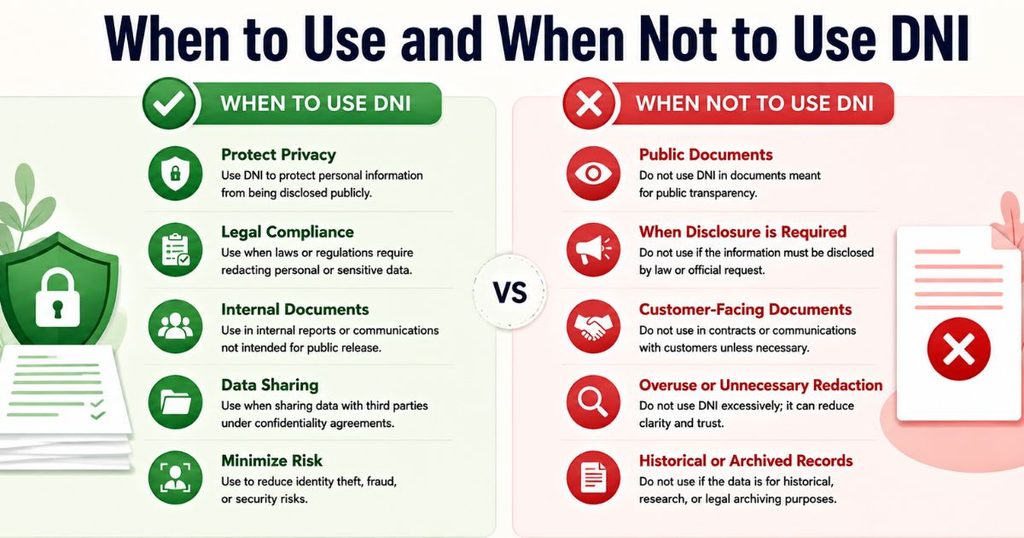
Like any boundary-setting term, DNI is useful in some situations and unnecessary or excessive in others.
When to Use DNI
- Setting clear boundaries around sensitive or mature content
- Protecting a smaller or younger audience from inappropriate followers
- Filtering out specific harmful behaviors, such as harassment
- Creating a safer space within a niche online community
When Not to Use DNI
- Applying it to overly broad or vague categories of people
- Using it as a joke without a genuine boundary behind it
- Listing excessive, hard-to-enforce rules that confuse followers
- Using it in professional or formal online spaces where it feels out of place
What Does DNI Mean on TikTok?
On TikTok, DNI usually appears in a creator’s bio or pinned comment, often paired with a specific list of who should avoid interacting with their content.
This is especially common among younger creators who want to filter out inappropriate followers or unwanted attention before it becomes a problem. TikTok’s DNI culture tends to be more casual than Twitter’s, though the underlying purpose remains the same.
What Does DNI Mean on Twitter?
Twitter, now X, is often considered the platform where DNI culture became most established. Many users include a DNI list directly in their bio, covering categories like age restrictions, political views, or specific behaviors they will not tolerate.
Because Twitter bios are short and public-facing, DNI became a fast, effective way to communicate boundaries before someone even sends the first message.
DNI Meaning in the Olympics
Outside of texting slang, DNI has an entirely different meaning in sports, particularly the Olympics, where it stands for “Did Not Implement” or more commonly “Did Not Start,” depending on the specific event and scoring system used.
In this context, DNI has nothing to do with boundaries or social media, and instead reflects an athlete’s participation status in a given event.
What Does DNI Mean in Government?
In government and intelligence contexts, DNI most commonly refers to the Director of National Intelligence, a formal title used within the United States government. This meaning is entirely separate from the texting definition and typically appears in news articles, official reports, or policy discussions rather than casual conversation.
Other Meanings of DNI in Text
Beyond “Do Not Interact,” DNI occasionally carries other meanings depending on context, including:
- Do Not Include: used in list-making or planning contexts
- Director of National Intelligence: used specifically in political or news contexts
These alternate meanings are far less common in everyday texting, where DNI overwhelmingly refers to the “Do Not Interact” boundary-setting phrase.
Similar Slang Words or Alternatives
DNI belongs to a small group of boundary-related acronyms used across social media. The table below compares the most common ones.
| Acronym | Full Meaning | Typical Use |
| DNI | Do Not Interact | Boundary-setting on profiles and bios |
| BYI | Block, You’re Interacting | A response to unwanted interaction after a DNI is ignored |
| MYOB | Mind Your Own Business | General boundary phrase in casual conversation |
| NTA | Not Trying to Argue | Used to de-escalate a disagreement |
While these terms overlap in the general theme of setting limits, DNI is specifically tied to controlling who engages with an account.
Why People Use DNI in Texting and Social Media
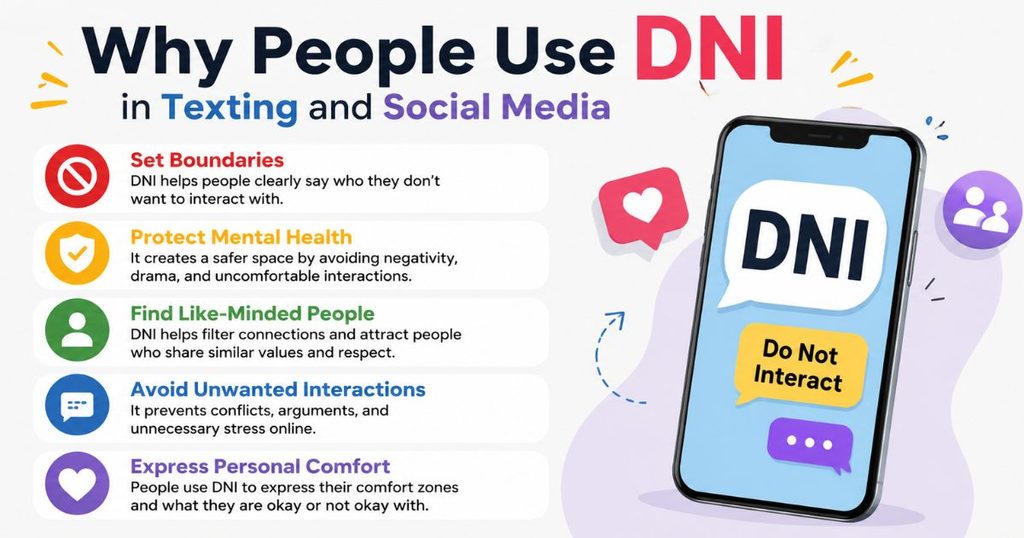
DNI did not become popular by accident. It developed as a response to real needs many social media users share.
Setting Boundaries
DNI gives users a fast, clear way to communicate limits without needing a lengthy explanation for every unwanted interaction.
Protecting Mental Health
By filtering out specific people or behaviors in advance, users can avoid repeated exposure to harassment, negativity, or unwanted attention.
Controlling Audience
Creators use DNI to shape who engages with their content, especially when discussing sensitive or niche topics not meant for everyone.
Building Safe Communities
Within fandoms and online communities, DNI helps establish shared expectations, keeping spaces safer for members who follow the guidelines.
Fast Communication
Instead of writing a full paragraph explaining boundaries, DNI condenses the message into three letters that are widely understood.
Is DNI Rude or Respectful?
Whether DNI feels rude or respectful largely depends on how it is phrased and the reasoning behind it.
Respectful Use
“DNI if you’re a minor, this account discusses adult topics” reads as protective and clearly justified.
Neutral Use
A simple, general DNI list without explanation can come across as neutral, especially in spaces where this format is the norm.
Harsh Use
An aggressive or overly broad DNI list, especially one targeting vague groups without explanation, can feel confrontational rather than protective.
DNI Meaning on Discord Explained
On Discord, DNI often appears in personal profile notes or server rules, functioning similarly to its use on Twitter and TikTok. Server owners frequently include DNI criteria to filter out unwanted members before they join, while individual users may add it to their status or about section to set personal boundaries within larger communities.
Because Discord servers are often built around specific interests, DNI helps maintain a more controlled and comfortable environment for existing members.
DNI vs BYI: What Is the Difference?
DNI and BYI are closely related but serve slightly different purposes in boundary-setting culture.
| Feature | DNI | BYI |
| Full Meaning | Do Not Interact | Block, You’re Interacting |
| Function | Sets the boundary in advance | Enforces the boundary after it’s crossed |
| Timing | Preventive | Reactive |
| Common Placement | Bios, pinned posts | Replies or direct responses |
In short, DNI tells people not to engage in the first place, while BYI signals that someone ignored that boundary and will now be blocked.
DNI Culture Among Gen Z Communities
Among Gen Z users, DNI has become deeply tied to fandom and niche online communities, where shared boundaries help maintain a sense of safety and belonging.
It often appears alongside pronouns, age, and content warnings in a single bio, forming a quick snapshot of who an account welcomes and who it does not.
This reflects a broader trend of proactive boundary-setting, where users prefer clearly stating expectations upfront rather than addressing issues only after they occur.
Frequently Asked Questions
What does DNI mean in text?
DNI means “Do Not Interact,” used to tell specific people not to engage with an account or post.
What does DNI mean on TikTok?
On TikTok, DNI usually appears in a bio to filter out unwanted followers or inappropriate interactions.
Is DNI the same as blocking someone?
No, DNI is a stated boundary, while blocking is the action taken if that boundary is ignored.
What does DNI mean in government contexts?
In government, DNI refers to the Director of National Intelligence, unrelated to its texting meaning.
Is using DNI considered rude?
Not usually, especially when it includes clear, reasonable explanations for the boundary being set.
What is the difference between DNI and BYI?
DNI sets a boundary in advance, while BYI is used after someone violates that boundary.
Can DNI apply to specific behaviors instead of groups?
Yes, many DNI lists focus on behaviors like harassment or disrespect rather than broad categories of people.
Conclusion
DNI is a clear, purposeful piece of social media shorthand that means “Do Not Interact.” Whether it appears in a TikTok bio, a Twitter pinned post, or a Discord profile, it almost always serves the same function of setting boundaries before problems arise.
Understanding its meaning, proper use, and the difference between related terms like BYI makes it easier to both use DNI responsibly and interpret it correctly when encountered online.
