
Finding the right words to express gratitude can make your message feel warmer, more genuine, and memorable. While the phrase “token of appreciation” is common in professional and personal communication, using fresh alternatives can help your thank you message sound more natural and meaningful.
Whether you are writing a thank you note, appreciation email, business message, or heartfelt card, choosing the perfect phrase adds emotional value. This guide shares professional, polite, and creative alternatives to “token of appreciation” along with practical examples you can use in real conversations.
When Should You Use These Alternatives?
Different situations call for different expressions of gratitude. A formal workplace email may require professional wording while a personal thank you message sounds better with emotional language.
You can use these alternatives in business appreciation messages, customer thank you notes, employee recognition programs, friendship messages, teacher appreciation cards, volunteer acknowledgments, and professional emails.
| Situation | Best Type of Phrase |
| Business appreciation | Professional thank you |
| Teacher gratitude | Heartfelt acknowledgment |
| Gift presentation | Small gesture of thanks |
| Employee recognition | Recognition of your efforts |
| Customer appreciation | Grateful acknowledgment |
| Friendship messages | Warm thank you |
28+ Other Ways to Say “Token of Appreciation”
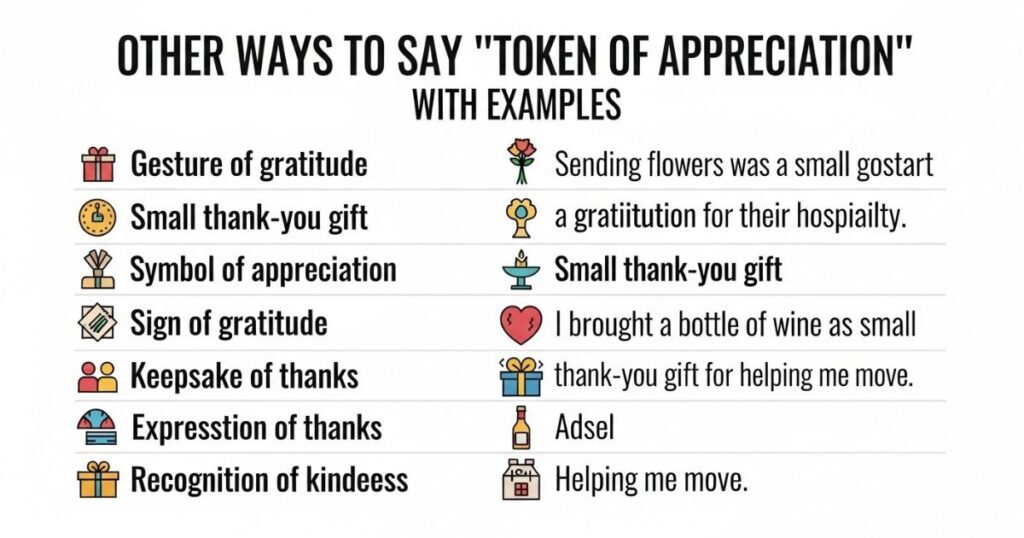
A Small Gesture of Thanks
This phrase sounds simple, warm, and friendly. It works perfectly in casual conversations and appreciation cards. Example: “Please accept this small gesture of thanks for always being there during difficult times.”
A Sign of Gratitude
This alternative sounds polite and respectful in both personal and professional communication. Example: “The flowers were a sign of gratitude from the entire team.”
A Gesture of Appreciation
A professional sounding phrase often used in workplaces and business communication. Example: “The company offered a gesture of appreciation for the employee’s dedication.”
A Thank You Gesture
This phrase feels direct, natural, and easy to understand. Example: “The dinner invitation was a thank you gesture after the successful event.”
A Symbol of Thanks
A meaningful option that highlights emotional value more than material value. Example: “The framed photo became a symbol of thanks for years of friendship.”
A Meaningful Thank You
This phrase sounds emotional and heartfelt in appreciation messages. Example: “This small gift is a meaningful thank you for your endless support.”
A Modest Thank You
A humble phrase that works well in polite communication. Example: “Please accept this modest thank you for your kindness and generosity.”
A Heartfelt Thank You
One of the most sincere ways to express appreciation emotionally. Example: “She sent a heartfelt thank you after receiving support from her coworkers.”
A Small Thank You Gift
This phrase is practical and commonly used in workplaces and events. Example: “We prepared a small thank you gift for all volunteers.”
A Sincere Expression of Thanks
A professional phrase ideal for formal appreciation. Example: “The certificate served as a sincere expression of thanks for his years of service.”
A Grateful Gesture
An elegant phrase often used in speeches and formal messages. Example: “The donation was a grateful gesture toward the local community.”
A Thank You Note of Appreciation
Perfect for thank you cards and written messages. Example: “She included a thank you note of appreciation with the package.”
A Token of Thanks
A close variation that sounds fresh while keeping the original meaning. Example: “The award was presented as a token of thanks.”
A Mark of Appreciation
This phrase emphasizes respect and recognition. Example: “The company bonus was a mark of appreciation for excellent performance.”
A Personal Thank You
A warm option for emotional and personal conversations. Example: “I wanted to send a personal thank you for your constant encouragement.”
A Simple Thank You
A short and clear phrase suitable for every situation. Example: “Sometimes a simple thank you means more than expensive gifts.”
A Thankful Gesture
A thoughtful expression of gratitude that feels natural. Example: “The handwritten letter was a thankful gesture from the students.”
A Recognition of Your Efforts
A professional phrase commonly used in workplaces and organizations. Example: “This award is a recognition of your efforts and dedication.”
A Thoughtful Thank You
This option sounds caring and emotional. Example: “The handmade card was a thoughtful thank you from the children.”
A Thank You Offering
A formal sounding phrase often used in ceremonies and events. Example: “The organizers presented a thank you offering to the guest speaker.”
A Warm Thank You
A friendly phrase suitable for personal appreciation. Example: “Please accept our warm thank you for attending the celebration.”
A Professional Thank You
Best for formal emails and business communication. Example: “She sent a professional thank you after the interview.”
A Grateful Acknowledgment
A polished phrase often used in speeches and official communication. Example: “The plaque served as a grateful acknowledgment of his contribution.”
A Thank You Gesture of Respect
This phrase combines gratitude with admiration and respect. Example: “The team arranged a thank you gesture of respect for the retiring manager.”
A Sign of Appreciation
A versatile phrase that works in nearly every context. Example: “The flowers were a sign of appreciation from the organization.”
A Courtesy Thank You
A polite and professional phrase for formal communication. Example: “The company shared gift baskets as a courtesy thank you.”
A Gesture of Gratitude and Respect
This phrase sounds thoughtful and meaningful. Example: “The scholarship fund became a gesture of gratitude and respect.”
An Expression of Gratitude
A polished and elegant alternative suitable for professional writing. Example: “The award was presented as an expression of gratitude for her dedication.”
A Kind Appreciation Gift
A soft and friendly alternative ideal for casual situations. Example: “We prepared a kind appreciation gift for loyal customers.”
Best Alternatives for Professional Emails
Professional communication requires clear and polished wording. Phrases like “recognition of your efforts,” “grateful acknowledgment,” “professional thank you,” and “mark of appreciation” sound respectful and workplace friendly. These alternatives improve email tone and make appreciation messages sound more genuine without becoming overly formal.
| Professional Phrase | Best Use |
| Professional thank you | Business emails |
| Recognition of your efforts | Employee appreciation |
| Mark of appreciation | Workplace awards |
| Grateful acknowledgment | Official communication |
| Sincere expression of thanks | Formal appreciation |
How to Choose the Right Phrase
Choosing the right appreciation phrase depends on your audience, tone, and situation. Professional settings require polished language while personal conversations sound better with emotional and warm wording.
A thank you card for a friend should feel natural and caring while a workplace appreciation email should remain respectful and concise.
The best appreciation messages are short, meaningful, and authentic. Always match your wording to the occasion so your gratitude feels genuine instead of forced.
Why Using Different Appreciation Phrases Matters
Using different gratitude phrases improves communication and keeps writing interesting. Repeating the same wording again and again can make messages feel dull or robotic. Varied appreciation language helps readers stay engaged while making your message sound thoughtful and sincere.
Different expressions also improve professional writing, strengthen emotional connection, and support SEO keyword diversity in online content.
Common Mistakes to Avoid
Many people use overly formal language that feels cold in personal conversations. Others repeat the same phrase too often which makes writing repetitive. Some appreciation messages become too long and lose emotional impact.
The best way to avoid these mistakes is to keep your message clear, natural, and suitable for the audience. Short and sincere gratitude usually feels more powerful than lengthy wording.
Creative Ways to Express Gratitude Naturally
Natural appreciation messages often sound more meaningful than overly polished phrases. Instead of trying to sound perfect, focus on being genuine and clear.
Examples include:
“Your support truly meant a lot to us.”
“This is a little way of saying thanks.”
“We appreciate everything you have done.”
“Thank you for always helping when needed.”
“Please accept this small thank you from our team.”
These simple expressions feel warm, authentic, and emotionally engaging.
Appreciation Phrases for Different Situations
Workplace Appreciation
Professional environments benefit from respectful and polished wording. Phrases like “recognition of your efforts,” “professional thank you,” and “grateful acknowledgment” work especially well in offices and corporate communication.
Teacher Appreciation
Teachers appreciate emotional and heartfelt gratitude. Expressions such as “heartfelt thank you,” “sign of gratitude,” and “meaningful thank you” sound thoughtful and sincere.
Customer Appreciation
Businesses use appreciation phrases to build stronger customer relationships. “Courtesy thank you,” “sign of appreciation,” and “thank you gesture” work naturally in customer communication.
Friendship and Family
Personal relationships allow warm and emotional language. “Warm thank you,” “thoughtful thank you,” and “personal thank you” create a stronger emotional connection.
Bonus Section: Short Polite Alternatives You Can Use
If you need quick and simple alternatives, these phrases work beautifully in cards, captions, and emails. Much appreciated, deepest gratitude, thank you kindly, with appreciation, truly grateful, warm regards and thanks, and endless thanks are all natural sounding options that fit everyday communication.
Final Writing Tips
Good appreciation writing feels genuine, simple, and emotionally clear. Avoid overcomplicated wording and focus on natural communication. Choose phrases that match the tone, audience, and situation so your message sounds authentic and memorable.
Strong gratitude language improves relationships, creates positive impressions, and makes every thank you message more meaningful.
Frequently Asked Questions.
What is another professional way to say token of appreciation?
You can use phrases like “mark of appreciation” or “recognition of your efforts” in professional communication.
Which phrase sounds most heartfelt?
“A heartfelt thank you” sounds emotional, sincere, and personal.
Can these phrases be used in business emails?
Yes, many of these alternatives work perfectly in formal and workplace communication.
What is the simplest alternative?
“A simple thank you” is short, clear, and suitable for everyday use.
Why should I avoid repeating the same phrase?
Using different wording keeps your writing natural, engaging, and less repetitive.
Which phrase works best for customers?
“A sign of appreciation” and “courtesy thank you” work well in customer messages.
Are these alternatives good for thank you cards?
Yes, these appreciation phrases are perfect for thank you cards, notes, and messages.
Conclusion
Using different ways to say “token of appreciation” helps your writing feel fresh, thoughtful, and engaging. Whether you need professional phrases for business communication or emotional wording for personal messages, the right expression can make your gratitude more sincere and memorable.
From “a small gesture of thanks” to “a grateful acknowledgment,” these alternatives allow you to express appreciation naturally in every situation. Choosing meaningful and audience friendly wording ensures your thank you message leaves a lasting impression.
